

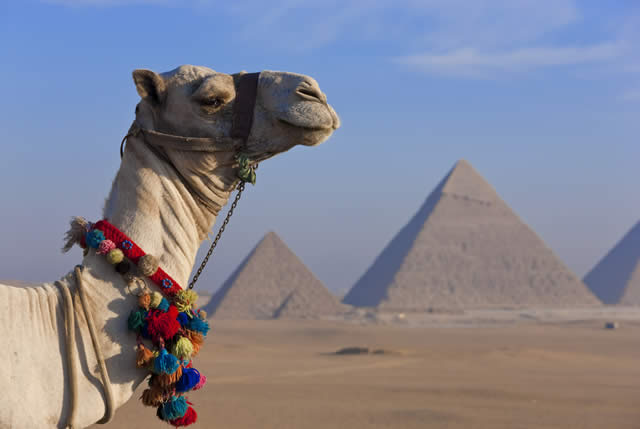
You have just two days in Egypt—one of the world’s most historically rich destinations—and no idea where to start. That feeling of overwhelm is real, but the good news is that a well-planned weekend can deliver an extraordinary range of experiences, from the iconic pyramids of Giza to the temple-lined banks of the Nile in Luxor.
Egypt rewards the time-pressed traveler more than most destinations. Its greatest treasures are concentrated, well-connected, and—when approached with the right itinerary—entirely accessible in 48 hours. This guide cuts through the noise to give you a clear, expert-backed plan for making the most of a short trip to Egypt.
Discovering Egypt’s Timeless Allure
Few destinations carry the weight of history that Egypt does. Civilizations rose and fell along the Nile’s banks for more than 5,000 years, leaving behind monuments so ambitious in scale that they continue to baffle engineers and historians today.
According to National Geographic Travel (2023), Egypt remains one of the world’s top destinations for heritage tourism, drawing millions of visitors annually to sites that date back to 3100 BCE and beyond.
For first-time visitors arriving with limited time, the instinct is often to see everything. Resist that impulse. A focused weekend—split between Cairo and Luxor—will leave you with a far richer experience than a rushed attempt to cover the entire country.
A Glimpse into Ancient Civilizations
Egypt’s appeal is rooted in its sheer age. The monuments you’ll visit this weekend were not built centuries ago—they were built millennia ago. The Great Pyramid of Giza, for example, was constructed around 2560 BCE, making it roughly 4,500 years old. The temples of Luxor and Karnak followed centuries later, during the height of the New Kingdom period.
Understanding this timeline matters. When you stand at the base of the Great Pyramid, you are looking at a structure older than the Roman Empire by more than 2,000 years. That context transforms sightseeing into something closer to genuine historical reckoning.
Cairo: The Heartbeat of History
Begin your weekend in Cairo. As Egypt’s capital and largest city, Cairo functions as both the country’s cultural nerve center and its primary gateway for international arrivals. The city is loud, layered, and relentlessly alive—a metropolis of more than 20 million people built directly alongside one of antiquity’s most sacred rivers.
Arrive on Friday evening if possible. Use that first night to settle in, explore a local restaurant in the Zamalek or downtown districts, and orient yourself for the days ahead. Cairo’s culinary scene is underrated; dishes like koshari, ful medames, and grilled kofta offer an authentic and affordable introduction to Egyptian cuisine.
The Grandeur of Giza’s Pyramids
Saturday morning belongs entirely to Giza. Located on Cairo’s southwestern edge—reachable in under 30 minutes from the city center—the Giza Plateau is home to the Great Pyramid, the Pyramid of Khafre, the Pyramid of Menkaure, and the Great Sphinx. Arrive early, before 8:00 AM, to beat both the heat and the crowds.
The scale of the site is difficult to overstate. The Great Pyramid stands at 138 meters tall and contains an estimated 2.3 million stone blocks, each weighing between 2.5 and 15 tons. According to Smithsonian Magazine (2023), ongoing archaeological investigations continue to reveal new chambers and passages within the pyramid complex, suggesting that its full architectural scope is still not entirely understood.
Purchase a general admission ticket at the gate, and consider adding access to the interior of the Great Pyramid if your budget allows—walking through the ascending passage toward the King’s Chamber is an experience that few historic sites anywhere in the world can match.
Allow two to three hours at the plateau before returning to Cairo for the afternoon.
Unraveling Treasures at the Egyptian Museum
Saturday afternoon is best spent at the Egyptian Museum in Tahrir Square, one of the world’s foremost collections of ancient artifacts. Housing more than 170,000 objects, the museum spans every major period of Egyptian history, from the pre-dynastic era through the Greco-Roman period.
The undisputed centerpiece is the Tutankhamun collection—a suite of rooms dedicated to the artifacts recovered from the boy pharaoh’s intact tomb, discovered by Howard Carter in 1922. The golden death mask of Tutankhamun, weighing 11 kilograms and crafted from solid gold, is among the most recognized objects in the history of art.
Plan for two hours at minimum. The museum is dense with material, and attempting to see everything in one visit is both exhausting and counterproductive. Prioritize the Tutankhamun galleries, the Royal Mummies Hall, and the statue of Khafre, recovered from the Valley Temple at Giza.
Note that the Grand Egyptian Museum, located adjacent to the Giza Plateau, has been progressively opening its galleries and is expected to become the primary home for many of these artifacts. Check current opening status before your visit, as the transition between institutions may affect access.
Luxor: Where Temples Touch the Sky
On Sunday morning, take an early domestic flight from Cairo to Luxor—the journey takes approximately one hour and connects two of Egypt’s most historically significant cities. Luxor, known in antiquity as Thebes, served as Egypt’s capital during the New Kingdom period and remains the world’s greatest open-air museum, according to Lonely Planet’s Egypt Travel Guide (2024).
The East Bank holds Luxor Temple and Karnak Temple Complex. Start at Karnak, the larger of the two—a sprawling network of sanctuaries, pylons, and obelisks constructed over a period of 2,000 years by successive pharaohs. The Hypostyle Hall alone, with its 134 massive columns arranged across a space the size of a cathedral, justifies the flight from Cairo.
Luxor Temple, located at the heart of the modern city and connected to Karnak by the recently restored Avenue of Sphinxes, is best experienced in the late afternoon when the stone glows gold in the descending light.
Cruising the Sacred Nile
No visit to Luxor is complete without time on the Nile itself. A short felucca ride—the traditional single-sail wooden boat used on the river for centuries—offers a quieter, more reflective perspective on both the landscape and the legacy of the civilization it sustained.
The Nile’s agricultural floodplain, made possible by the river’s annual inundation before the construction of the Aswan High Dam, was the foundation of Egyptian civilization. Every monument you visited this weekend was built by a society that depended entirely on this river for its survival. Seeing it from the water makes that relationship tangible in a way that no museum exhibit can replicate.
Practical Tips for Your Egyptian Escapade
A few logistical essentials will ensure your weekend runs smoothly. Egypt’s currency is the Egyptian pound; carry cash for entry fees, local transport, and smaller restaurants, as card acceptance varies.
The best time to visit is between October and April, when daytime temperatures in Cairo and Luxor are comfortable rather than extreme.
Hire a licensed, government-registered guide at major sites rather than accepting offers from unlicensed individuals near the entrance gates. A knowledgeable guide at Karnak or the Giza Plateau will dramatically enrich your understanding of what you are seeing. Dress modestly, particularly at temple sites, and carry water at all times—dehydration is a common and avoidable issue for first-time visitors.
Egypt in 48 Hours: Is It Worth It?
Emphatically, yes. A weekend in Egypt is not a compromise—it is a concentrated, carefully curated experience that can deliver genuine depth if approached with intention. The pyramids of Giza, the Egyptian Museum, the temples of Karnak and Luxor, and a sunset on the Nile represent some of the most significant human achievements ever made. Two days is enough time to encounter all of them meaningfully.
Return flights to Cairo are widely available from major European and Middle Eastern hubs, and domestic connections to Luxor are frequent and affordable. The infrastructure for short-trip tourism in Egypt is well-established and improving steadily.
Egypt does not ask for months of your time. It asks only for your full attention—and in return, it offers a window into a civilization that shaped the course of human history.
image credit: envato.com
Comments