

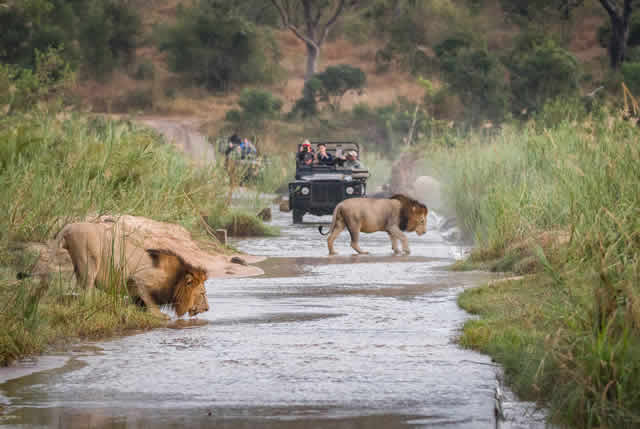
Many travelers dream of watching a lion survey the savanna at dawn, or following a herd of elephants as they move through golden grassland—but when it comes time to plan, the sheer scope of choices can feel overwhelming.
Where do you go? When do you travel? How do you stay safe and make the most of every game drive?
An African safari offers one of the most extraordinary wildlife viewing experiences on earth. With the right planning, you can witness the Big Five animals—lion, leopard, rhinoceros, elephant, and Cape buffalo—roaming freely across landscapes that have changed little in thousands of years.
This guide covers everything from choosing your destination and timing your trip, to photography techniques and sustainable travel practices that protect the wildlife you came to see.
Why Africa Calls
The global wildlife tourism market was valued at $190.7 billion in 2025 and is projected to reach $380.9 billion by 2033, growing at a compound annual rate of 9.2% (Grand View Research, 2026).
That momentum reflects something profound: travelers are no longer satisfied with passive experiences. They want genuine connection with the natural world, and Africa delivers that with a depth and scale found nowhere else on earth.
More than 60% of African wildlife tourism centers on the Big Five, and South Africa’s national parks alone receive over 10 million visitors each year (Explorest Travel, 2025).
Yet beyond the statistics, what draws people back time and again is something harder to quantify—the feeling of watching a leopard drag its kill into a fever tree at dusk, or hearing the low rumble of a lion pride just beyond your camp’s firelight. These are experiences that stay with you long after you’ve returned home.
The Magic of Wildlife Encounters
Africa’s Big Five earned their name from early big-game hunters who considered these the most formidable animals to track on foot. Today, that framing has evolved entirely. The term now represents the pinnacle of ethical wildlife viewing, with each species carrying its own conservation story.
Rhinos remain critically endangered—more than 450 were poached in South Africa in 2023 alone—while lions and leopards are classified as vulnerable by the IUCN Red List (Explorest Travel, 2025). Witnessing these animals in their natural habitat is both a privilege and a quiet act of advocacy for their survival.
Beyond the Big Five, an African safari immerses you in an entire ecosystem. Giraffes move with unhurried elegance through acacia woodland. Cheetahs accelerate across open plain in short, explosive bursts.
Wild dogs hunt in coordinated packs at the edge of dawn. Each game drive is different, shaped by season, landscape, and the unpredictable rhythms of the wild.
Choosing the Right Safari Destination
Africa’s top safari regions each offer a distinct experience, and matching your destination to your expectations makes an enormous difference.
South Africa’s Kruger National Park spans nearly 20,000 square kilometers and remains the most accessible Big Five destination on the continent, with options ranging from self-drive adventures to guided luxury stays in private reserves like Sabi Sand and Mala Mala (Explorers Against Extinction, 2026). The Greater Kruger is best visited between April and October, when dry conditions concentrate wildlife near water sources.
Tanzania draws visitors to the Serengeti and Ngorongoro Crater, but traveling further south to Ruaha and Nyerere (formerly Selous) rewards those who want vast, crowd-free wilderness and a genuine sense of remoteness.
Kenya’s Masai Mara is exceptional year-round for first-time safari travelers, offering dense wildlife, sweeping savannahs, and direct flights from London to Nairobi. The Mara peaks between August and October, when the Great Migration arrives from the Serengeti.
Zambia’s South Luangwa is renowned for walking safaris and exceptional leopard sightings, while Botswana’s Okavango Delta—one of the world’s largest inland deltas—offers pristine wetland landscapes and exclusive camps that deliberately limit visitor numbers to preserve the experience.
Zimbabwe, often overlooked, delivers some of Africa’s finest guiding, particularly in Hwange National Park, where enormous elephant herds gather during the dry season.
Planning Your Safari Adventure
A well-planned safari begins with clear priorities. Are you seeking the thrill of predator sightings, the spectacle of the Great Migration, a walking safari, or a family-friendly malaria-free experience? Each objective points toward a different destination and travel window.
Once you know what you want, research accommodation types—luxury tented camps, private lodges, and budget rest camps serve very different expectations—and book guides and permits well in advance.
Peak-season safari camps frequently book out 12 to 18 months ahead, and early planning generally means better pricing on international flights (Explorers Against Extinction, 2026).
Travel insurance with medical evacuation cover is non-negotiable. Many safari regions are remote, and evacuation by light aircraft may be the only way to access emergency care quickly.
Before departure, consult a travel health professional at least two months out about recommended vaccinations, including yellow fever and hepatitis A. If you’re visiting malaria-endemic areas, seek advice on prophylaxis at least one month before you travel (African Budget Safaris, 2026).
Best Time to Visit African Wildlife Reserves
The dry season, running from May through October, is consistently the best period for wildlife viewing across most of sub-Saharan Africa.
As water sources shrink, animals—predators and prey alike—converge at rivers, waterholes, and pans, creating spectacular concentrations that make sightings more predictable and photography more rewarding (African Budget Safaris, 2025). Data from 2023 to 2024 shows that up to 70% of park visits occur between June and August, reflecting the strength of this season’s appeal.
September and October stand out as peak wildlife months, when vegetation is sparse, water is scarce, and predator activity intensifies around the remaining permanent sources.
If budget matters more than certainty, the shoulder months of May and November offer an excellent compromise—fewer crowds, more competitive lodge rates, and wildlife viewing that remains strong as animals transition between seasonal ranges.
The green season, from November through April, brings its own rewards: lush landscapes, newborn animals, and prolific birdlife, though game can be harder to spot as water disperses across the bush.
Essential Safety and Preparation Tips
Safari environments are wild and unpredictable, but millions of travelers move through them safely each year. The key is respecting the rules that experienced guides and park authorities have developed over decades.
As Monica Wambui of Asili Adventure puts it simply: "Never approach animals too closely. Do not whistle, harass animals, or interfere with hunts; remember you are an observer only" (African Budget Safaris, 2026).
During game drives, remain seated at all times unless your guide explicitly instructs otherwise. Safari vehicles are designed to appear as neutral objects to wildlife—standing or leaning out breaks that profile and can trigger a defensive response from elephants, buffalo, or big cats with cubs nearby.
On walking safaris, follow your guide’s instructions immediately and without hesitation, move in single file, and never attempt to explore on foot independently. Wear neutral-colored clothing in khaki, olive, or tan, and avoid dark blue or black, which can attract tsetse flies in some regions (African Budget Safaris, 2026).
Hydration deserves serious attention. As Susan Minnar of Chameleon Safaris in Namibia notes, "Dehydration and sun exposure are the two most underestimated safari risks.
Drink water constantly, not just at meals, and protect your skin every day" (African Budget Safaris, 2026). Apply high-SPF sunscreen throughout the day, wear a wide-brimmed hat, and carry more water than you think you’ll need.
Photography and Observation Techniques
Dawn and dusk game drives offer the best conditions for both observation and photography. Predators are most active during these windows, and the low-angle light creates a warmth and depth that midday shooting simply cannot replicate.
Guides report that up to 70% of Big Five sightings occur during these hours, so prioritizing early departures pays dividends (Explorest Travel, 2025).
For photography, a zoom lens of 200mm to 400mm allows you to capture frame-filling images of animals without the vehicle needing to approach uncomfortably close. Keep your camera stable—resting it on a beanbag across the vehicle door is far steadier than hand-holding—and anticipate rather than react.
Watch the animal’s body language: a cheetah scanning the horizon, a lion’s ears rotating forward, or a buffalo’s heavy turn of the head often signals something about to happen. The most compelling safari photographs come from patience, not proximity.
Sustainable and Ethical Safari Practices
Tourism’s relationship with African wildlife is only sustainable if the industry actively reinvests in conservation. Approximately 70% of lodges now hold eco-certification, with a growing number committing to carbon-neutral operations and community benefit programs (Explorest Travel, 2025).
In November 2025, South Africa announced a new transfrontier safari corridor linking Kruger, Limpopo, and neighboring protected areas, combining multi-day routes with community-run eco-lodges and revenue-sharing models that directly benefit local communities (Grand View Research, 2026).
When choosing where to stay and who to travel with, look for operators who fund anti-poaching units, employ and train local communities, and minimize environmental impact through low-waste camp design and renewable energy systems.
The UNWTO has documented that community-supported tourism leads to better-protected reserves, improved wildlife monitoring, and reduced human-animal conflict over time. Your spending choices, from lodge selection to souvenir purchases, form a tangible part of this conservation ecosystem.
A Safari Worth Taking
An African safari is not simply a holiday. It is a recalibration—a reminder that the world is vast, that ancient ecosystems still function on their own terms, and that human beings are visitors in something far older and more complex than any city or itinerary. The traveler who returns from a well-planned safari rarely returns unchanged.
The planning may feel daunting at first, but every detail—the destination, the season, the guide, the camp—shapes what you’ll witness and carry home with you.
Start with what matters most to you, work outward from there, book early, and travel with respect for the animals and communities that make it all possible. Africa’s wilderness has been waiting a long time. It will not disappoint.
image credit: envato.com
Comments