

Few things ruin a vacation faster than the sight of a tiny reddish-brown bug scurrying across your pillowcase. If you’ve ever hesitated before flopping onto a hotel bed, wondering whether you’re about to share the night with unwanted roommates, you’re not alone.
The good news is that bedbugs are a genuine, documented risk in hotels, but the panic surrounding them often outpaces reality. Infestations vary widely depending on location, property turnover, and seasonal travel patterns, and a few minutes of smart inspection can tell you almost everything you need to know before you unpack.
Bedbugs have become something of a cultural boogeyman, the subject of viral social media warnings and late-night hotel horror stories. Yet separating fact from fiction matters, because overreacting can mean missing a real vacation while underreacting can mean bringing an infestation home in your suitcase.
This guide walks through what’s actually happening in hotels across the country, why these pests spread so easily in hospitality settings, and exactly how to check your room before you ever let your guard down.
The Reality Of Bedbugs In Hotels
Bedbugs are not a rare or isolated problem. According to the National Pest Management Association’s (NPMA) 2025 Bed Bug Facts report, more than 82% of pest control professionals treated a bedbug infestation within the past year, and 70% of those professionals specifically treated hotels and motels.
That figure doesn’t mean seven in ten hotels are infested, but it does confirm that hospitality settings remain one of the most common environments where pest professionals encounter these insects, right alongside single-family homes and apartments.
Geography plays a meaningful role too. Orkin’s 2026 Bed Bug Cities report, based on treatment data collected between May 2025 and May 2026, ranks Chicago as the most bedbug-affected city for yet another year, followed by Los Angeles, Detroit, Cleveland, and Indianapolis.
Midwestern cities dominate the list, with Ohio alone placing six metro areas in the top 50. Newer entries like Tampa, Kansas City, and Myrtle Beach signal that popular vacation destinations are climbing the rankings as well, likely tied to concerts, festivals, and sporting events that bring heavy visitor turnover.
It’s worth noting that no single, reliable national statistic exists for the percentage of hotels currently infested with bedbugs. What we do have is strong evidence from pest control treatment data showing that hotels, especially in high-traffic cities, remain consistently vulnerable regardless of star rating or nightly price.
Bedbugs don’t discriminate based on cleanliness or cost; they’re drawn to warmth, carbon dioxide, and a steady supply of hiding spots, all of which exist in budget motels and luxury resorts alike.
Why Bedbugs Thrive In Hotel Environments
Hotels offer bedbugs exactly what they need to spread quickly: constant guest turnover and an endless supply of luggage. Every new arrival brings a chance for hitchhiking insects to transfer from a suitcase or jacket into the room’s furniture, and every departure gives those same insects a free ride to the next destination.
Dr. Shannon Sked, an entomologist and National Technical Director at Orkin, explains that bedbugs are remarkably resilient and difficult to control once they’ve been introduced into a hotel room, largely because they’re so skilled at hiding in cracks, crevices, and personal belongings.
This resilience is part of why detection often happens too late. Bedbugs can survive for months without feeding and tolerate a wide range of temperatures, which means a room that sat empty for weeks could still harbor an active population.
They’re also flat and tiny enough to squeeze into baseboards, electrical outlets, and the seams of mattresses, staying hidden during the day and only emerging at night to feed. By the time a guest notices bites or visible evidence, the infestation may have already spread to adjoining rooms or been carried out in someone’s bag.
Signs Of Bedbug Presence In Your Hotel Room
Before you fully settle in, a quick visual sweep of the room can reveal a lot. Start with the mattress and box spring, looking for small reddish-brown insects about the size of an apple seed, along with nearly translucent, cream-colored nymphs that are harder to spot.
Dark, ink-like stains on the sheets or mattress seams are often a sign of bedbug droppings, while pale, papery shells near the seams indicate shed skins left behind as the insects mature.
Bites themselves can be misleading. They typically appear overnight, start out painless, and develop into itchy red welts that often show up in a line or cluster, usually on exposed skin like arms, legs, or the neck. However, the NPMA notes that some people show no visible reaction at all, which means skin marks alone shouldn’t be your only method of detection.
A sweet, musty odor in the room, described by Orkin as one of the telltale signs of a heavier infestation, can also be a useful clue if you notice it near the bed or upholstered furniture.
Where To Inspect For Bedbugs
A thorough but quick inspection focuses on a handful of high-risk zones rather than the entire room. Begin at the headboard, since it’s one of the most commonly overlooked hiding spots and sits directly against the wall where bugs can travel between rooms through shared outlets or baseboards.
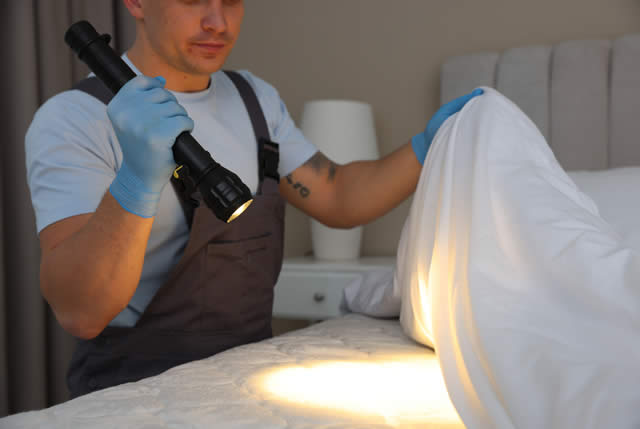
Pull back the sheets and check the mattress seams, tufts, and piping with a flashlight, running a credit card or similar flat object along the seams to dislodge anything hiding in the folds.
Move next to upholstered furniture, including couches, chairs, and curtains, since these fabric surfaces offer the same kind of hiding spots as a mattress. Nightstands and dressers deserve attention too, particularly the drawers and the areas where furniture legs meet the carpet.
Bathroom fixtures are lower risk but still worth a glance, especially if towels or robes have been stored near the bed. This kind of room sweep mirrors the professional approach pest experts use, just scaled down to something any traveler can do in a few minutes.
Steps To Protect Yourself During Your Stay
Orkin recommends a simple framework for hotel guests known as the S.L.E.E.P. method, which stands for searching the room, lifting sheets and furniture to check underneath, elevating luggage away from the bed and floor, examining luggage again while repacking, and placing clothing in a hot dryer once you’re back home.
Following this order before you unpack anything gives you a reliable checkpoint system rather than a vague sense of unease.
Luggage placement matters more than most travelers realize. Keep suitcases on a luggage rack positioned away from the bed and walls rather than setting them directly on the floor or mattress, since both surfaces are common points of contact for bedbugs looking for a new host to travel with.
When it’s time to check out, inspect your luggage one more time before loading it into your vehicle, and consider storing clothes in sealed plastic bags until you can wash them.
Once home, run anything that was in your suitcase through a hot dryer cycle for 30 to 45 minutes, since high heat is one of the most effective ways to eliminate any hitchhikers before they ever make it into your closet.
What To Do If You Suspect Bedbugs
If you spot any signs during your stay, don’t wait to see if the problem resolves on its own. Bedbug infestations rarely go away without professional intervention, and the NPMA reports that 76% of pest control professionals consider bedbugs the most difficult pest to eliminate, which is why DIY treatments are rarely effective and licensed professionals are always the better call.
Photograph any evidence you find, including live insects, shed skins, or staining, and notify hotel management immediately so they can inspect the room and arrange for proper treatment.
Ask to be moved to a different room, ideally not one directly adjacent to or above the affected room, since bedbugs can travel short distances through walls and plumbing. Keep your luggage sealed and elevated during the transition, and avoid placing any clothing in hotel closets or drawers until the situation is resolved.
Once you’re home, isolate your luggage in a garage or laundry area rather than bringing it straight into a bedroom, and wash and dry all travel clothing on high heat as an extra precaution. It’s also reassuring to know that, according to PestWorld, bedbugs are not known to transmit disease to humans, so while the experience is unpleasant, it isn’t a serious health emergency.
Traveling Smart Beats Traveling Scared
Bedbugs are a real and ongoing concern in the hospitality industry, but they’re also a manageable one. The data from pest professionals and national treatment reports confirms that these insects remain a persistent challenge in hotels across every price point and region, with cities like Chicago, Los Angeles, and Detroit seeing the heaviest treatment activity. What makes the difference between a ruined trip and a peaceful one isn’t luck, it’s preparation.
A five-minute inspection using the techniques outlined here, paired with smart luggage habits and a willingness to speak up if something looks off, puts the odds firmly in your favor. Travel is meant to be enjoyed, not spent anxiously eyeing every seam in a hotel comforter, and a little knowledge goes a long way toward making sure it stays that way.
- National Pest Management Association (NPMA), "2025 Bed Bug Facts and How to Prevent an Infestation," PestWorld.org, 2025. https://www.pestworld.org/news-hub/pest-articles/bed-bug-survey-results-facts/
- Orkin, "Chicago Tops Orkin’s 2026 Bed Bug Cities List Again as Vacation Hot Spots Climb the Ranks," July 7, 2026. https://www.orkin.com/press-room/chicago-worst-city-for-bed-bugs-again
image credit: envato.com
Comments