

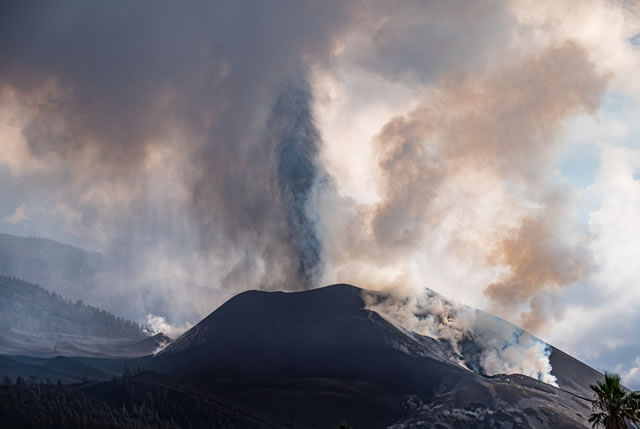
You’ve hiked mountain trails and explored national parks, but nothing quite prepares you for standing at the edge of an active volcano. The ground hums beneath your feet, the air smells of sulfur, and somewhere below the surface, the Earth is very much alive.
Visiting an active volcano is one of the most extraordinary travel experiences available—and with the right preparation, it’s more accessible than most people realize.
The Allure of Active Volcanoes
Volcano tourism has grown significantly over the past decade. What draws travelers isn’t recklessness—it’s a primal curiosity about the planet’s raw power.
These destinations combine dramatic landscapes, rich cultural history, and geological wonder in ways that few other places can. From Hawaii’s erupting caldera to the ancient slopes of Sicily, each volcanic destination offers something deeply memorable.
Planning Your Fiery Expedition
Before you book anything, research is everything. Volcanic conditions change quickly, and what’s accessible one week may be restricted the next. For any destination, identify the official monitoring agency for that volcano—such as the United States Geological Survey (USGS) for Hawaiian volcanoes or Italy’s National Institute of Geophysics and Volcanology (INGV) for Etna and Stromboli.
These agencies publish real-time alerts, access bulletins, and safety advisories. Check them often, not just before you depart.
Equally important is choosing reputable, licensed local guides. Certified guides carry real-time information on route changes, exclusion zones, and sudden shifts in volcanic activity. They are your most valuable safety resource on the ground.
Mount Etna, Italy: Europe’s Iconic Giant
Standing at roughly 3,400 meters, Mount Etna is Europe’s tallest and most active volcano, and it has been erupting in some form for over 3,000 years. A significant eruption cycle began on Christmas Eve 2025, with lava flows emerging from the Southeast Crater.
Italy’s Civil Protection authorities responded with updated safety restrictions, including a 200-meter exclusion zone from active lava flows, a dusk curfew on excursions, and altitude caps that can change daily.
The good news for travelers: Etna remains fully open. Cable car and 4×4 services operate from Rifugio Sapienza on the south side, and guided hikes continue with adjusted routes depending on daily conditions.
Seeing Etna during an active phase is, in many ways, a richer experience than visiting during a quiet period. Steam venting from the craters, fresh lava deposits glowing against dark rock, and the sheer geological theatre of it all make this one of the world’s most compelling travel destinations.
Always book with a licensed volcanological guide and check the INGV website before your visit.
Kilauea, Hawaii, USA: The Pacific’s Living Volcano
Kīlauea, located within Hawaiʻi Volcanoes National Park on the Big Island, is one of the most active volcanoes on Earth. Its current eruption began on December 23, 2024, and has since produced 51 distinct lava fountaining episodes within Halemaʻumaʻu crater at the summit caldera. During Episode 51 on July 15, 2026, the north vent lava fountain reached a maximum height of approximately 950 feet.
All areas of the national park remain open. However, visitors should prepare for the realities of an active volcanic environment. Tephra—fragments of volcanic rock and glass—accumulates on roads and trails during active episodes, and the National Park Service advises wearing eye protection, a dust mask, long-sleeve shirts, long pants, and closed-toed shoes.
Volcanic emissions also remain elevated, posing a risk to children and anyone with respiratory conditions. Before visiting, check the NPS air quality alert system and follow the park’s social media channels for real-time closure updates. The USGS webcam offers a live view of summit activity.
Kīlauea also carries profound cultural significance. Pele, the Hawaiian goddess of fire and volcanoes, is central to Hawaiian spiritual life, and many locals visit the park for prayer, meditation, and offerings. Approaching this landscape with respect for that tradition deepens the experience considerably.
Stromboli, Italy: Lighthouse of the Mediterranean
Stromboli sits in the Tyrrhenian Sea off the coast of Sicily and has been erupting almost continuously for over 2,000 years. NASA has confirmed that its near-constant cycle of small explosions—lava spraying into the sky at regular intervals—has earned it the nickname "The Lighthouse of the Mediterranean."
Guided sunset treks are currently permitted up to 400 meters above sea level with a certified guide, and the viewing experience from that altitude is extraordinary. Excursions typically run five to seven hours and can be booked from the island’s small village. Because the eruptions are so consistent, this is one of the most reliable places in the world to witness active volcanic activity.
Pacaya, Guatemala: Hike Through Living Lava
Located about an hour from the colonial city of Antigua, Pacaya is a relatively accessible but genuinely active volcano. Tours depart daily, usually in the afternoon, and cover approximately 3.7 miles with around 1,300 feet of elevation gain—manageable for most reasonably fit travelers.
The trail moves through forest before giving way to expansive lava fields where heat radiates noticeably through the ground underfoot.
Lava visibility varies by week and season, so ask your tour operator about current conditions before booking. Crowds peak between December and April and again from June through August. Gear matters enormously here: sturdy hiking boots are essential, as cheap soles can begin separating from the heat of the lava rock.
Long pants are not optional—the thermal radiation from the ground can cause skin irritation and burns. Bring at least 1.5 liters of water per person, and seriously consider renting a walking stick at the trailhead. Travel insurance that covers adventure activities is strongly recommended for this destination.
Mount Bromo, Indonesia: A Spiritual Landscape
Mount Bromo rises dramatically from the Sea of Sand—a sweeping expanse of volcanic ash within Bromo Tengger Semeru National Park in East Java. Most visitors begin before dawn to reach the Penanjakan viewpoint for sunrise, watching the sky shift through orange and pink as the volcano’s silhouette slowly emerges from the mist.
From there, a jeep ride across the caldera floor brings you to the base of Bromo, where a short staircase leads to the crater rim.
The experience here is as much cultural as it is geological. The Tenggerese people, who have inhabited this volcanic landscape for centuries, maintain a deep spiritual connection to Mount Bromo.
Their annual Yadnya Kasada ceremony draws thousands, with offerings thrown directly into the crater as an expression of gratitude and reverence. Visiting Mount Bromo with awareness of this tradition transforms what might otherwise feel like a scenic stop into something far more meaningful.
Safety First: Navigating Volcanic Terrain
Every active volcano carries real hazards that change without notice. Beyond wearing appropriate gear—sturdy boots, long sleeves, protective eyewear in ash-prone areas—the single most important safety principle is to respect exclusion zones.
These boundaries exist because volcanic activity can escalate rapidly. Guides who push visitors beyond regulated limits are not offering a better experience; they are creating an avoidable risk.
Emergency protocols vary by country and park. In Hawaii, the NPS provides clear evacuation routes and real-time alerts. In Italy, the Civil Protection authority and INGV coordinate warnings. Wherever you travel, identify the local emergency number before you arrive and keep your phone charged.
Beyond the Crater: Volcanic Region Wonders
The landscapes surrounding active volcanoes are often as compelling as the volcanoes themselves. Kilauea’s national park encompasses lava tubes—tunnels formed by flowing lava that cooled on the outside while molten rock drained from within—offering an underground perspective on volcanic geology.
The mineral-rich soils around volcanic regions support remarkably diverse flora, and endemic bird species thrive in these environments, making them rewarding for naturalists alongside adventure seekers.
The Geology and Culture of Volcanic Destinations
Volcanoes have shaped human civilization as profoundly as any geological force. The fertile soils produced by centuries of volcanic activity support agriculture across Sicily, Java, and Guatemala’s highlands.
In each of these regions, local culture has grown around and because of volcanic geography—from Sicilian volcanic winemaking to the spiritual traditions of the Tenggerese to Hawaiian mythology. Understanding that context makes every step of a volcanic hike feel more grounded in the world rather than removed from it.
Embrace the Power of Nature
Visiting an active volcano is not about chasing danger. It is about witnessing a process that has shaped this planet for billions of years, one that continues regardless of what humans do around it.
With solid research, the right gear, a licensed guide, and genuine respect for the environment and the communities that call these places home, a volcanic destination delivers a travel experience that very few other landscapes can match. The Earth is speaking—these are places where you can actually hear it.
- Etna Explore. (2026, March 27; updated July 8, 2026). Etna eruption & access restrictions 2026: What visitors need to know. https://etnaexplore.com/travel-guides/etna-eruption-restrictions-2026/
- Euronews Travel. (2025, June 2). Mount Etna volcanic eruption: Is it safe to travel to Sicily and are flights cancelled? https://www.euronews.com/travel/2025/06/02/mount-etna-volcanic-eruption-is-it-safe-to-travel-to-sicily-and-are-flights-cancelled
- Hawaii Volcano Expeditions. (2026, July 16). Kilauea lava update: Episode #51 has ended. https://hawaiivolcanoexpeditions.com/blog/lava-update-the-latest-eruptions-on-the-big-island/
- Kura-Kura Bus. (2025). Mount Bromo: Indonesia’s most volcanic landscapes. https://kura2bus.com/blog/mount-bromo-indonesias-most-volcanic-landscapes/
- A Little Adrift. (2026, June 22). What to know before hiking Pacaya volcano. https://alittleadrift.com/climbing-pacaya-volcano-antigua/
- Magmatrek. (2026). Stromboli volcanological guides: Current excursion access. https://www.magmatrek.it/en/
- NASA Science – Earth Observatory. (2025). Eruption of Stromboli Volcano, Italy. https://science.nasa.gov/earth/earth-observatory/eruption-of-stromboli-volcano-italy/
- United States Geological Survey (USGS). (2026, July 16). Kīlauea – Volcano updates. https://www.usgs.gov/volcanoes/kilauea/volcano-updates
image credit: envato.com
Comments