

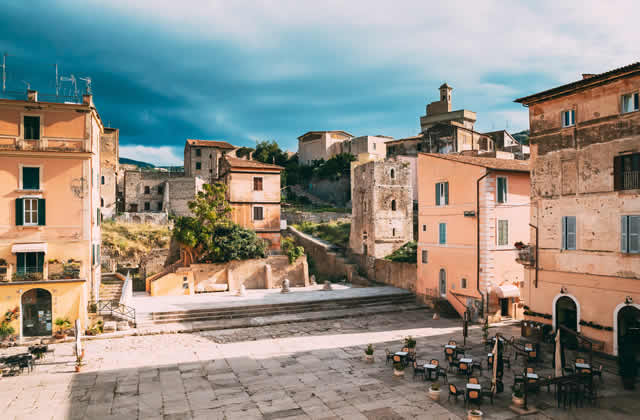
Imagine waking up to the gentle hum of an Italian village stirring to life. Instead of the frantic rush to pack suitcases and catch the next train, you stroll down to the local bar for your morning cappuccino, where the barista already knows your order.
You nod to the neighbors, stop by the weekly market to pick up fresh artichokes, and spend the afternoon reading in a sun-drenched piazza. This isn’t just a vacation; it is a temporary life.
Spending a month in one well-chosen area of Italy offers a profound departure from the typical whirlwind tour of "must-see" sights. It allows you to peel back the layers of a culture that prioritizes rhythm, connection, and the simple pleasures of daily existence.
For many travelers, the dream of living in Italy feels daunting to organize, yet the reward is a deeply personal connection to one of the world’s most beloved countries.
By shifting your perspective from checking off boxes to sinking roots into a region, you gain something precious: time. Time to understand the local dialect, time to discover the best gelateria that isn’t in any guidebook, and time to let the Italian lifestyle seep into your bones.
The secret to a successful month-long stay lies not in finding a single perfect town, but in choosing a strategic hub—a region that balances rural charm with the connectivity you need to explore.
Why Base Yourself in One Area for a Month?
The concept of "slow travel" has gained immense popularity, and for good reason. Traditional tourism often leaves travelers exhausted, having seen everything but experienced very little.
When you move locations every two or three days, your memories become a blur of train schedules and hotel lobbies. In contrast, basing yourself in one area for a month transforms your relationship with the destination.
First, there is the practical benefit of stability. Unpacking once means you can truly settle in. You can stock the kitchen with local olive oil and wine, do laundry without hunting for a laundromat, and establish a comforting routine.
This stability reduces the stress of travel logistics, freeing up mental energy to actually enjoy your surroundings. You are no longer a transient tourist passing through; you become a familiar face, a temporary resident.
Second, a centralized base allows for spontaneous exploration. When you aren’t bound by a rigid itinerary, you have the freedom to take day trips based on your mood or the weather.
If it is raining, you might visit a nearby museum or simply stay in and cook a long lunch. If the sun is shining, you can hop on a train to a coastal town or drive through the rolling hills. This flexibility is the luxury of time.
Finally, deep immersion offers a cultural education that is impossible to achieve on a short trip. You learn the nuances of Italian social etiquette, the importance of the evening passeggiata (stroll), and the seasonal rhythm of food.
You might strike up a conversation with a shopkeeper who recommends a festival in a neighboring village that no tourist would know about. These small, authentic interactions are the true treasures of travel, and they only reveal themselves when you slow down enough to notice them.
Key Regions and Hub Cities
Choosing the right base is the most critical decision you will make. You want a location that feels intimate and authentic but doesn’t leave you isolated.
The ideal "hub" offers the quiet charm of the countryside while keeping you within easy reach of major transportation networks.
Three regions stand out for offering this perfect balance: Tuscany, Umbria, and Emilia-Romagna.
Tuscany: The Classic Choice Near Florence
Tuscany needs little introduction. It is the landscape of Renaissance dreams, with its cypress-lined driveways, golden hills, and unparalleled artistic heritage. Basing yourself here puts you in the heart of classic Italy.
The key is to look for a village or small town within 30 to 60 minutes of Florence. This could be in the Chianti area, or perhaps near the walled cities of Siena or Lucca.
Staying in the countryside outside Florence gives you the best of both worlds. You have the tranquility of vineyards and olive groves right outside your door, offering endless opportunities for scenic walks and wine tasting.
Yet, you are never far from the artistic treasures of the Uffizi Gallery or the architectural wonder of the Duomo. The regional rail network in Tuscany is extensive, meaning you can easily hop on a train to Pisa, Arezzo, or even further afield to Rome or Milan for a longer day trip.
Living near Florence also means access to world-class amenities. You will find excellent English-speaking services if needed, a wide variety of restaurants ranging from rustic osterias to Michelin-starred establishments, and a vibrant cultural calendar.
It is an ideal choice for first-time long-stay travelers who want the reassurance of a well-traveled path combined with the beauty of rural life.
Umbria: The Green Heart Near Perugia
If Tuscany feels a bit too polished or crowded for your taste, Umbria offers a more rugged, authentic alternative. Known as the "Green Heart of Italy," Umbria is characterized by dense forests, medieval hill towns, and a mystical atmosphere.
Basing yourself near the regional capital of Perugia, or close to the spiritual center of Assisi or the festival town of Spoleto, provides a deeply immersive experience.
Life in Umbria moves at a slower pace. The stone farmhouses and villas here feel timeless, often anchored in strong local communities that have remained largely unchanged for centuries.
You are less likely to be surrounded by other tourists and more likely to be shopping alongside grandmothers who have lived in the village their whole lives. The cost of living and accommodation can also be slightly lower than in neighboring Tuscany.
Despite its rural feel, Umbria is surprisingly well-connected. Perugia has a small airport and good rail links, while the main train line running north-south through Italy makes it feasible to reach Rome or Florence in about two hours.
A month in Umbria is perfect for those seeking quiet reflection, spiritual history, and a connection to nature, without sacrificing the ability to explore central Italy.
Emilia-Romagna: The Culinary Soul Near Bologna
For food lovers, there is no better base than Emilia-Romagna. This region is the birthplace of balsamic vinegar, Parmigiano Reggiano, prosciutto di Parma, and fresh egg pasta.
Basing yourself in the countryside or a small town within 30 to 40 minutes of Bologna places you at the epicenter of Italian gastronomy.
Emilia-Romagna is distinct from its neighbors to the south. The landscape is flatter in the Po Valley, transitioning into hills towards the Apennines, and the towns are bustling, prosperous, and incredibly welcoming.
Living here means your daily life will revolve around food—shopping at incredibly high-quality local markets, learning to cook regional specialties, and dining in some of the best restaurants in the country.
Beyond the food, the strategic advantage of this region is its connectivity. Bologna is arguably the most important railway hub in Italy. From Bologna Central Station, high-speed trains can whisk you to Venice, Florence, Milan, or Verona in roughly an hour or less.
This makes it an exceptional base for travelers who want to sleep in a quiet country home but spend their days exploring Italy’s most famous cities. It offers an unbeatable combination of rural relaxation and urban accessibility.
Criteria for Choosing Your Base
When browsing listings, it is easy to get seduced by a beautiful photo of a farmhouse view. However, for a month-long stay, logistics are just as important as aesthetics. To ensure your stay is comfortable and convenient, focus on three main criteria: proximity to rail, access to an airport, and local walkability.
Proximity to a Main Rail Line
While renting a car is often necessary for grocery runs and exploring hidden countryside gems, you do not want to be entirely dependent on it for every excursion.
Driving into major cities like Florence or Rome can be stressful due to traffic and restricted traffic zones (ZTLs). Therefore, your country home should ideally be within a 20 to 30-minute drive of a train station on the main or high-speed network.
Having easy rail access unlocks the rest of Italy. It transforms a difficult two-hour drive into a relaxing forty-minute train ride. It means you can have a second glass of wine with lunch in the city without worrying about the drive home.
Before booking, check the distance to the nearest station and look at the schedule to ensure trains run frequently, especially in the evenings.
One Hour to a Major Airport
For a short vacation, a long transfer from the airport is manageable. But when you are moving your life for a month, likely with more luggage and perhaps specialized gear, simplicity is key.
Try to choose a base that is within about an hour’s drive of a major airport, such as those in Florence, Bologna, Rome, or Milan.
This proximity makes your arrival and departure days much less stressful. It also makes it easier if you have friends or family visiting you during your stay.
If you need to fly home for an emergency or simply want to take a weekend trip to another European capital, being near a major airport offers peace of mind and flexibility.
A Walkable Nearest Town
Isolation is romantic for a weekend, but it can become lonely over the course of a month. To truly feel the local rhythm, look for a property where you can walk into a town or village.
Being able to stroll to a cafe for your morning espresso, pick up fresh bread, or enjoy an evening passeggiata without getting in the car is essential for integration.
A walkable town acts as your community anchor. It is where you will start to recognize faces and where locals will start to recognize you. It provides a sense of belonging that a remote hilltop villa cannot.
When researching, use satellite maps to check the actual walking distance and road conditions—walking two kilometers on a flat sidewalk is very different from walking two kilometers on a narrow, winding country road with no shoulder.
Resources for Finding Accommodation
Finding the perfect month-long rental requires a different approach than booking a hotel for a few nights. You are looking for a home, not just a room.
Since specific inventory changes constantly, it helps to know which channels to use and how to filter your search effectively.
Major Vacation-Rental Platforms
The large global platforms are a good starting point because of their volume of listings and user-friendly interfaces. When searching, filter for "entire place" to ensure privacy.
Crucially, adjust your dates to see pricing for stays of 28 days or more; many hosts offer significant monthly discounts that aren’t visible on shorter searches.
Use the map view to zoom in on the "belts" around your target hub cities—Florence, Perugia, or Bologna. Look for listings that have robust kitchens, washing machines, and reliable Wi-Fi, which are non-negotiable for a long stay.
Pay close attention to reviews that mention the host’s helpfulness. A proactive host who lives nearby can be a lifeline when you need a plumber or advice on the best local doctor.
Local Agencies in Your Target Region
For a more curated experience, turn to local experts. Many Italian regions have specialized agencies that manage farmhouses, villas, and apartments. These agencies often have exclusive listings that don’t appear on the big global sites.
Searching for terms like "Tuscany villa agency," "Umbria agriturismo rental," or "Emilia Romagna holiday homes" can lead you to these smaller, boutique firms.
The advantage of a local agency is their deep knowledge of the area. They can tell you which specific hill has the best sunset views, which village has the liveliest weekly market, and whether a property is truly suitable for a long-term stay.
They can also assist with arranging car rentals, cooking classes, and other logistical details, acting as a concierge service for your trip.
Agriturismi (Farm Stays)
An agriturismo is a working farm that has been licensed to host guests. These can range from rustic rooms to luxurious apartments. For a month-long stay, look for agriturismi that offer self-catering apartments with their own kitchens.
These properties often operate like small compounds, where the owners live on-site and are deeply plugged into the local community.
Staying at an agriturismo offers a unique form of cultural immersion. You are literally living on the land, often surrounded by olive groves, vineyards, or livestock. The owners are usually eager to share their produce and their knowledge of the region.
It is an ideal setup if you want a balance of privacy and connection, avoiding the sterility of a resort while enjoying the safety and support of a family-run environment.
Embracing the Italian Lifestyle
Once you have secured your base, the real journey begins. To maximize your experience, you must actively choose to engage with the culture.
Prioritize finding a base near a real village rather than a purely touristy hill town. Look for signs of year-round life: a pharmacy, a butcher, a school, and a local bar where people are reading newspapers, not just looking at phones.
Before you even arrive, try to connect with your hosts. Ask them about local festivals (sagre), market days, and public transport options. Ask if they can introduce you to community activities like cooking classes or language lessons. Engaging in these activities turns you from an observer into a participant.
Consider traveling during the shoulder seasons—late April to June, or September and October. The weather is generally mild, the landscape is vibrant, and the crowds are thinner.
This makes it easier to navigate narrow streets, get tables at popular restaurants, and strike up conversations with locals who aren’t overwhelmed by peak-season tourism.
Spending a month in Italy is a gift you give yourself. It is a chance to slow down, to breathe, and to see the world through a different lens.
By choosing a strategic base in Tuscany, Umbria, or Emilia-Romagna, you create a home away from home, a sanctuary from which you can explore the richness of Italian life at your own pace. It is an experience that will linger in your memory long after you have returned your keys and boarded the plane home.
- Rick Steves’ Europe: Planning a Trip’s Itinerary
- Lonely Planet: Italy Travel Guide
- ItaliaRail: Italy Train Map & Schedules
- Agriturismo.it: Italian Farmhouse Rentals
image credit: envato.com
Comments