

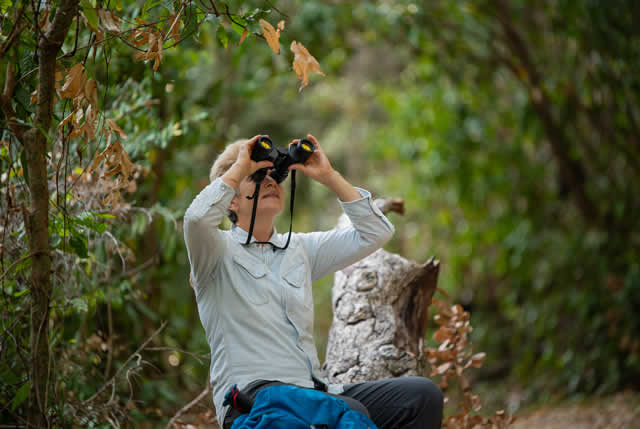
You’ve got binoculars, a field guide, and a genuine passion for birds—but choosing where to go next feels overwhelming. The United States spans a continent of staggering ecological diversity, and the sheer number of options can leave even experienced birders unsure where to start.
The good news: several regions stand out above the rest, each offering distinct avian communities, dramatic landscapes, and encounters that stay with you long after you’ve returned home.
The Pacific Northwest’s Pristine Habitats
Oregon and Washington sit at the heart of the Pacific Flyway, one of North America’s primary migratory corridors, drawing millions of birds each year through a network of coastal wetlands, river valleys, and forest habitats.
Oregon has recorded the sixth-highest bird species total among all 50 U.S. states—a remarkable figure that reflects both the region’s ecological richness and its geographic position along the western migration route.
Malheur National Wildlife Refuge, located in the east-central part of Oregon, ranks as the most productive birding site in the Northwest. Its auto tour route alone stretches 42 miles through expansive wetlands, where waterfowl numbers typically peak in March, and migrant songbirds flood woodlots in May and September.
McNary National Wildlife Refuge in Washington offers a different spectacle: large flocks of tundra swans foraging in seasonal wetlands from November through April, accompanied by up to 60,000 snow geese.
Along Oregon’s coast, the Oregon Islands National Wildlife Refuge encompasses 1,853 rocks, reefs, and islands that provide habitat for an estimated 1.2 million seabirds, including common murres, cormorants, and rhinoceros auklets.
California’s Diverse Ecosystems
According to Lawn Love’s 2025 Best States for Birdwatching ranking, California holds the top spot nationwide, recording 714 bird species—more than any other state.
Its landscape moves from fog-shrouded coastal cliffs to sun-baked desert basins, creating conditions that support an extraordinary range of avian life.
Point Reyes National Seashore, located about an hour north of San Francisco, offers exceptional coastal birding year-round, with a particularly rich concentration of migratory species during spring and fall.
Acorn woodpeckers, a bird renowned for their complex social behavior, are reliably found in California’s oak woodlands—as highlighted by birding experts who describe watching them stuffing acorns into granary trees as one of the most entertaining spectacles in North American birding.
The state also hosts the California condor, one of conservation’s greatest comeback stories, now visible in locations such as the South Rim of the Grand Canyon and Vermilion Cliffs.
With 54 Audubon chapters and 304 national and state parks, California provides accessible entry points for birders at every skill level.
The Southwest’s Desert and Canyon Birds
Arizona earns its reputation as a birding destination unlike any other in North America. Ramsey Canyon Preserve near Sierra Vista draws more than a dozen hummingbird species—violet-crowned, broad-billed, and blue-throated among them—earning the region the title of "Hummingbird Capital of the United States."
The nearby San Pedro Riparian National Conservation Area supports 100 breeding bird species and 250 migrant and wintering species, making it one of the most species-dense corridors on the continent.
Cave Creek Canyon in the Chiricahua Mountains adds another dimension entirely. Its six distinct habitat biomes attract the elegant trogon in summer and the Arizona woodpecker and lazuli bunting during spring and fall migration.
At Whitewater Draw Wildlife Area, more than 20,000 sandhill cranes arrive between October and March—some traveling from as far as Siberia—creating one of the most dramatic wildlife gatherings in the desert Southwest.
Across the border in New Mexico, Bosque del Apache National Wildlife Refuge hosts thousands of snow geese and sandhill cranes through winter, with the pre-dawn flyout a genuinely unforgettable event.
The Great Plains and Midwest Flyways
Nebraska’s Platte River delivers one of the most celebrated wildlife spectacles in North America. Each spring, the river valley becomes a staging ground for several million migratory birds, including the iconic sandhill crane, which gathers here in concentrations found nowhere else on earth.
The Sandhills region surrounding the Platte adds further appeal, supporting grassland species increasingly rare across the interior of the continent.
North Dakota and Minnesota consistently rank among the top states for wildlife refuges, with their prairie wetlands—known as the Prairie Pothole Region—serving as critical nesting habitat for nearly 50 percent of North American waterfowl.
For birders drawn to raptors, the region’s open landscapes during migration offer outstanding views of rough-legged hawks, northern harriers, and short-eared owls hunting over frost-silvered grasslands.
The Southeast’s Coastal and Wetland Treasures
The Gulf Coast, where Texas and Louisiana meet, functions as one of the most concentrated migratory corridors in the Western Hemisphere.
Texas serves as a migratory stopover for 623 different bird species—a statistic that underscores the state’s ecological importance, according to Audubon Texas. High Island, a small oak motive grove on the Texas coast, becomes a world-class birding destination each spring as exhausted warblers, tanagers, and orioles descend from trans-Gulf crossings and fill the trees in extraordinary numbers.
The area surrounding Beaumont and Lake Charles alone encompasses more than 34 birding hotspots, including Cameron Prairie National Wildlife Refuge, Sabine National Wildlife Refuge, and Cattail Marsh.
Louisiana’s coastal marshes add yet another dimension: year-round populations of roseate spoonbills, painted buntings, and a diverse assemblage of herons and egrets that make the region feel more tropical than temperate.
Florida’s Year-Round Bird Watching Paradise
Florida ranks second nationally in the 2025 Lawn Love analysis and leads all 50 states in endemic bird species—those found nowhere else—making it an essential destination for serious birders. The subtropical climate eliminates the seasonality constraints that define birding in much of the country, offering productive visits across the full calendar year.
Everglades National Park stands at the center of any Florida birding itinerary. The park supports more than 300 bird species, including the snail kite, limpkin, wood stork, anhinga, and purple gallinule—species requiring the specific hydrological conditions that the Everglades uniquely provides.
Audubon’s Corkscrew Swamp Sanctuary in Southwest Florida protects the largest old-growth bald cypress forest in North America, providing nesting habitat for wood storks and a boardwalk experience that brings visitors within close range of birds in their natural environment.
Florida also hosts two annual bird festivals, drawing enthusiasts from across the country to celebrate the state’s unmatched avian diversity.
Planning Your Trip for Maximum Success
Timing shapes every birding trip. Spring migration, generally running from late March through May, delivers peak diversity across most regions as birds move northward.
Fall migration offers a longer, more leisurely window, with shorebirds moving as early as July and waterfowl concentrations building through November.
The Merlin Bird ID app, developed by the Cornell Lab of Ornithology and available free of charge, has transformed field identification for birders of all skill levels. Its sound identification feature can detect and name species calling nearby in real time—an invaluable tool in habitats where many birds stay hidden in dense vegetation. F
or optics, a pair of 8×42 binoculars in the $200–$250 range, such as the Vortex Diamondback or Nikon Monarch, provides an excellent combination of image quality and ease of use for those new to the pursuit.
Pairing Merlin with eBird—the Cornell Lab’s citizen-science database—allows travelers to check recent sightings at specific locations before arriving, dramatically improving the chances of finding target species.
Begin Your Ornithological Journey
The United States offers birding experiences that rival any destination in the world—not someday, but now, across seasons and regions that reward planning and patience in equal measure.
Whether you start with the winter crane spectacle at Bosque del Apache, the spring warbler fallouts of the Texas Gulf Coast, or the year-round subtropical richness of the Florida Everglades, each destination offers something irreplaceable.
The birds are out there. The only question is which landscape calls to you first.
- Lawn Love. (2025). Feathered finds: 2025’s best states for birdwatching. https://lawnlove.com/blog/best-states-birdwatching/
- Levy, L. (2024, October 1). Six amazing places for fall birding. U.S. Fish & Wildlife Service. https://www.fws.gov/story/2024-10/six-amazing-places-fall-birding
- U.S. Fish & Wildlife Service. (n.d.). Wildlife watching at Bosque del Apache National Wildlife Refuge. https://www.fws.gov/refuge/bosque-del-apache/visit-us/activities/wildlife-watching
- National Park Service. (n.d.). Discover over 300 bird species – Everglades National Park bird watching spots. https://www.nps.gov/ever/planyourvisit/bird-watching-spots.htm
- National Audubon Society. (2025–26). Corkscrew Swamp Sanctuary. https://www.audubon.org/corkscrew
image credit: envato.com
Comments