

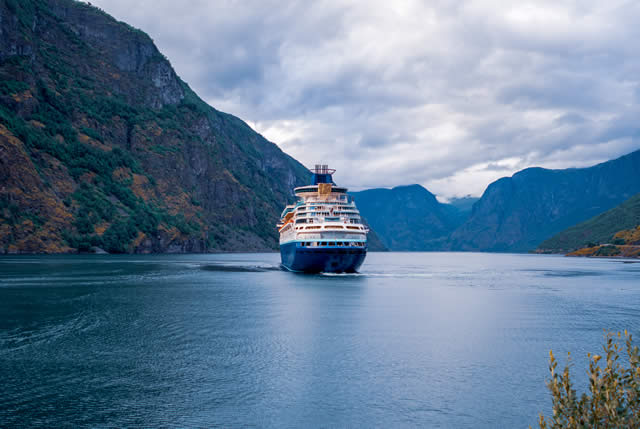
You’ve weighed the options, compared the prices, and now you’re wondering whether a river cruise truly earns its higher price tag—or if you’d be better off with a classic ocean voyage. The short answer is yes: for travelers who value cultural immersion, intimate ships, and all-inclusive convenience, river cruises are one of the most rewarding ways to explore Europe and Asia.
They carry you into the heart of historic towns that big ships simply cannot reach, and they wrap meals, excursions, and often gratuities into one clear fare. This guide walks you through why river cruises are worth considering, and which routes deserve a place on your shortlist.
What Makes River Cruises Different
River cruises trade scale for intimacy. Instead of towering vessels holding thousands of passengers, river ships are compact—often carrying between 80 and 200 guests. That smaller footprint lets them glide along Europe’s inland waterways and Southeast Asia’s rivers, docking right in the center of the towns you’ve come to see. There’s no tender boat and no long transfer from a distant port.
The format has clearly struck a chord. Viking, one of the industry’s leaders, accounts for nearly half of all river cruises taken by North Americans, according to AAA. That popularity reflects a simple appeal: you unpack once, then wake up somewhere new almost every morning.
The Case for River Cruises Over Ocean Cruises
The biggest difference comes down to proximity. Ocean cruises often stop at resort islands or industrial ports, while river cruises dock in living, working towns—think Vienna’s Ringstrasse or a riverside village where locals still shop the morning market. You spend your day exploring authentic destinations, not manufactured ones.
Onboard, the experience feels more personal. A higher staff-to-guest ratio means attentive service, and the programming leans cultural rather than flashy—expert lectures, cooking demonstrations, and live performances.
Many lines also bundle meals, guided excursions, and entertainment into the fare, so you face fewer surprise charges. For travelers who prefer substance over spectacle, that balance is hard to beat.
The Danube — Europe’s Imperial Corridor
The Danube is Europe’s second-longest river, winding through 10 countries and past four capital cities before it reaches the Black Sea. A typical week-long sailing links Budapest, Vienna, and Bratislava, gliding past baroque palaces, medieval abbeys, and the UNESCO-listed Wachau Valley.
This route suits culture seekers and first-timers alike. AmaWaterways, Viking, and Uniworld all run popular eight-day Danube itineraries, with highlights ranging from a Viennese waltz lesson to a private concert in a centuries-old cathedral. If you want one river that captures Europe’s grandeur, the Danube is the classic choice.
The Rhine — Castles and Vineyard Country
The Rhine flows from Switzerland to the Netherlands, threading through some of Europe’s most storied scenery. Along the UNESCO-listed Rhine Gorge, medieval castles crown the hillsides while vineyards tumble toward the water. Sailings typically call at Amsterdam, Cologne, Strasbourg, and Basel.
History lovers and wine enthusiasts find the Rhine especially rewarding. You can wander Amsterdam’s canals, stand beneath Cologne’s soaring cathedral, and explore Strasbourg’s half-timbered old town—all within a single voyage. It’s a route that blends dramatic landscapes with genuine cultural depth.
The Seine — A Floating Paris Experience
For a journey steeped in French charm, the Seine is hard to top. Bookended by Paris, these cruises drift toward Giverny—home to Monet’s famous gardens—the medieval streets of Rouen, and the historic D-Day beaches of Normandy.
The Seine speaks to art lovers and Francophiles who want to travel slowly through the landscapes that inspired the Impressionists. AmaWaterways and Tauck both offer Seine itineraries, and some pair the cruise with cycling excursions through Normandy for a more active take on the region.
The Mekong — Asia’s Defining River Journey
Cross into Southeast Asia and the tone shifts entirely. A Mekong river cruise threads between Ho Chi Minh City and Siem Reap, connecting the temples and markets of Cambodia with the layered history of Vietnam. The centerpiece is Angkor Wat, the largest religious monument ever built, though a sobering visit to Phnom Penh’s Tuol Sleng Genocide Museum lingers just as long in memory.
What sets the Mekong apart is its directness. The villages along the river are lived in, not preserved for tourists, so the connection between traveler and place feels immediate. Operators span a wide range: Pandaw offers strong cultural guiding from around $3,694 per person, while all-inclusive suite-class voyages with Scenic can reach $21,500.
AmaWaterways, Viking, and Uniworld sit comfortably in between. Most river-only sailings run seven nights, though fuller programs stretch to two weeks with added hotel stays.
The Yangtze — China’s Ancient Waterway
China’s Yangtze offers dramatic scenery on a shorter timeline. The core cruise typically lasts three to five days, carrying travelers through the towering cliffs of the Three Gorges and past ancient historical sites. Many visitors fold it into a longer tour that also takes in Beijing and Shanghai.
The Yangtze rewards those drawn to natural grandeur and deep history in equal measure. It’s an efficient way to experience one of the world’s most legendary rivers without committing to a lengthy voyage.
Timing and Budget — What to Know Before Booking
Season matters enormously. European river cruises shine from spring through fall, with the Christmas market sailings on the Danube and Rhine drawing their own devoted following in winter.
For the Mekong, the dry season from November to April is the sweet spot—November through February brings the most comfortable weather and the highest demand. The Yangtze is best in spring, from April to May, or in autumn, from September to October.
Budgets stretch across a wide spectrum. Value-focused lines like Pandaw start well under $4,000 per person, premium operators such as AmaWaterways and Viking typically run several thousand more, and ultra-luxury lines can price near $1,000 per person per day.
Whatever tier you choose, booking early secures better cabin selection and often better rates—especially for the peak months, which can sell out six to twelve months ahead.
Making the Journey Yours
River cruises deliver exceptional value for travelers who prize cultural immersion, intimate ships, and the ease of an all-inclusive package. The right choice comes down to what moves you—imperial capitals along the Danube, castle-lined bends of the Rhine, Impressionist light on the Seine, or the working villages of the Mekong.
Decide which river calls to you first, then match it to an operator and season that fit your budget. A conversation with a knowledgeable travel advisor can help you lock in the finer details and turn a promising idea into a trip you’ll remember for years.
- Gonzalez, Marti. "Best European River Cruises: Top Routes, Luxury Lines and Iconic Destinations." AAA Auto Club Group, September 18, 2025.
- Nunn, Lewis. "The Best Danube River Cruises For 2025, According To Experts." Forbes, January 11, 2025.
- Jain, Ati. "Mekong River Cruise Guide: Operators, Routes & Best Time." Small Ship Travel, 2025.
- Grizzle, Ralph. "My Favorite River Cruises 2026." River Cruise Advisor, 2026.
image credit: envato.com
Comments